

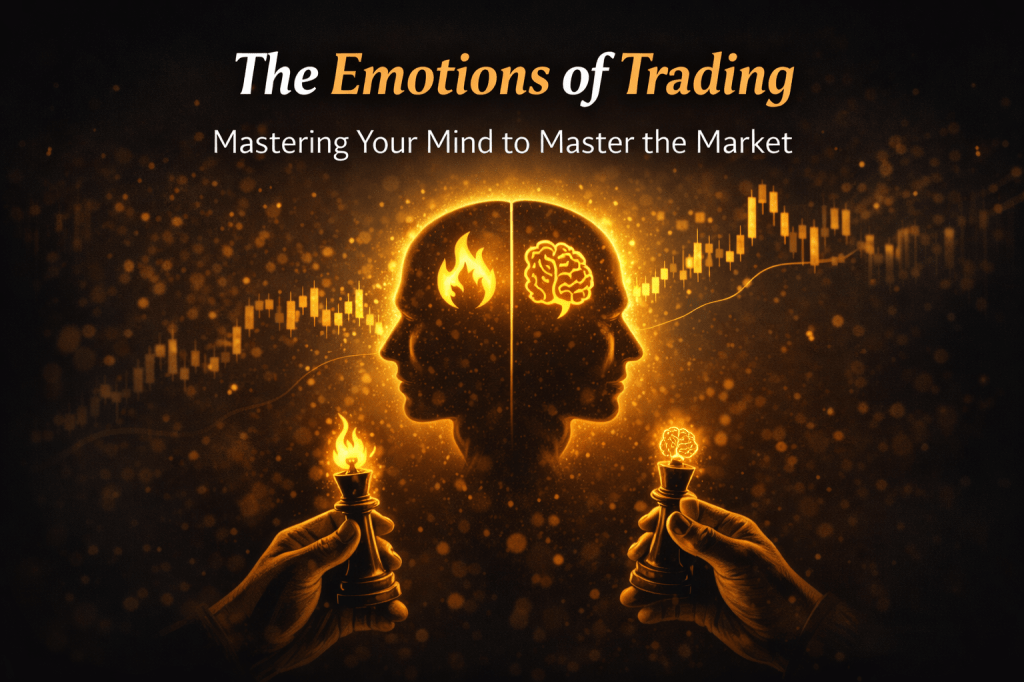
Many people will tell you that the key to success in trading is becoming emotionless.
I disagree.
After years of experience in the markets, I’ve learned that the goal isn’t to eliminate emotion but it’s to understand it.
Yes, you must follow your plan. Yes, discipline is non-negotiable. But ignoring what you feel doesn’t make you a better trader. Becoming aware of what you feel and why, does.
No two setups in the market are ever exactly the same. Price action may look similar, but context changes. Volatility changes. You change.
When you can clearly identify your emotions in real time, you begin to sharpen your edge.
Are you feeling fear because the setup is invalid?
Or because you don’t want to be wrong?
Are you anxious because the trade is extended?
Or because you over-leveraged and stepped outside your risk plan?
Did you enter with conviction?
Or did you force a trade that wasn’t truly yours?
These questions matter.
In my experience, psychology is not just part of trading. It may be the most important part. Strategy gives you structure. Psychology determines whether you execute it properly.
What I’ve noticed with newer traders is this: many struggle not because they lack a system, but because they struggle to confront their ego, impatience, or greed. Facing those parts of yourself is uncomfortable. It requires honesty. It requires humility.
But growth demands it.
So I’ll ask you:
Do you believe your challenge is purely strategic?
Or is it psychological?
Are you willing to sit with your emotions and examine them?
Or is that the part you avoid?
The market will always expose what’s unresolved within you. The question is — are you willing to look?
 Gold Dragon Trades
Leave a comment